Hello and welcome to the blog of first Australian Labradoodles in Poland! Here we will be showing you our everyday life, what we do, who we are - especially for those of you who can not visit us in person. Enjoy reading! If you want to read more about Australian Labradoodles please visit the website: www.labradoodle.com.pl

niedziela, 9 stycznia 2011

Puppies smarties (pictures)

Why did I decide to open this topic?

Well, we – human — try to fit dogs into our envi­ron­ment – we decide what they sho­uld or sho­uld not like, what they sho­uld or sho­uld not eat. It is we – people who manage the access to various reso­ur­ces. Howe­ver what is our goal? Do we take the natu­ral ani­mal needs into con­si­de­ra­tion or is it our human rules that we look into?
Recen­tly I saw very irri­ta­ted owner whose dog stop­ped for some snif­fing by the tree. Not one time I saw the owner pul­ling his dog who just hap­pe­ned to stop by the nearby bushes. Few days ago on an Ame­ri­can forum I came across fru­stra­ted woman wri­ting “How shall I unte­ach my dog sniffing??!!
Let’s discuss the mat­ter some more – what are the natu­ral needs of the dog?
– Snif­fing
– Che­wing
– Dig­ging
– Social con­tact (with human)
Those needs often and in most cases com­pete with our own – human rules. Not a lot of owners let their dog dig in the gar­den, chew on shoes and sniff when one is alre­ady late for work…
Howe­ver not ful­fil­ling those needs we really ask for tro­uble. The dog will ful­fill those needs either way and it can turn out that we will not like his way too much
It is also cru­cial to ful­fill those natu­ral needs espe­cially with pro­ble­ma­tic dogs as first of all – it makes the dog tired, second of all it builds self-confidence, and finally it redu­ces stress.
We have to remem­ber that if we let our dog sniff – we make his brain work. That in turn redu­ces stress and makes the dog even more tired than run­ning on a field.
I will now show how we enrich envi­ron­ment of the pup­pies as soon as they open their eyes, ears, stand on their own feet and are ready to taste some­thing other than bit­ches milk.
Buil­ding such puppy play field ena­bles pup­pies to ful­fill their natu­ral needs. They sniff, hunt, dig, lick ect. We are using dif­fe­rent tools from dif­fe­rent mate­rials and we hide a lit­tle bit of the doggy food in them, between them ect. Pup­pies sniff and when they find a treat they lick on it, eat it, chew it (depen­den­tly on the con­si­stence). After few minu­tes (for young pup­pies) they are tired and fall asleep.
The same hap­pens with the older pup­pies and the grow­nup dogs, howe­ver the play­gro­und can be moved out­side.
After the bre­eder does this job and han­dles the puppy to you – it beco­mes your job. Of course some will ask – how shall I build it on my own, some do not have the place. Well – it is not about buil­ding com­pli­ca­ted field at all. It is not even about buil­ding at all. Of course it is a lot of fun that you and our dog can have – espe­cially that you can use dif­fe­rent tre­ats and hide them in a very strange pla­ces (as it hap­pe­ned at one of the semi­na­ries that was held by the pupil of Turid Rugaas) as the water bowl. Instead you can take your dog for a walk on the very long leash and you can let him walk and sniff. If you take him to the woods and let sniff the other ani­mal sen­ses it is even better.
So what can we really do as the owners:
1. Walk your dog remem­be­ring about fol­lo­wing rules
– Long, loose leash
– Har­ness
– Do not pull the dog
– Do not talk to the dog
– Do not hurry
– Let the dog sniff
2. Give your dog some­thing to chew on safely (ava­ila­ble in Ger­many – NYLABONE bones that either a puppy or an adult dog can chew on (be care­ful to use the right king so that your dog will not tear it apart)
3. Let the dog dig. I know I know – who would want their gar­den to be full of holes? No one. You can howe­ver desi­gnate one place for dog to do it or take him to the woods. In Fin­land it is very popu­lar to make spe­cial sand­pits for the dogs.
Thro­ugh ages of joint exi­stence dogs have learnt how to fit in our envi­ron­ment, and they do it per­fec­tly howe­ver what is impor­tant for us will not neces­sa­rily be impor­tant for our dogs. I appeal – let the dogs, be the dogs and let them ful­fill their natu­ral needs — it will pay off.

Ple­ase enjoy the photos.

--------------------------------------------------------------------------------------------------


Elzbieta Gajewska
Włochata Pasja

First Professional Australian Labradoodle Kennel in Poland
www.labradoodle.com.pl

Fokker van originele Australian Labradoodles
www.australische-labradoodle.nl

Pierwsza hodowla Australijskich Labradoodle w Polsce
www.wlochata-pasja.com.pl

Snow, snow, snow…everything is getting white...

Sno­wing all the time..
It is so nice to play in the snow (some of us Saw it for the first time)


--------------------------------------------------------------------------------------------------


Elzbieta Gajewska
Włochata Pasja

First Professional Australian Labradoodle Kennel in Poland
www.labradoodle.com.pl

Fokker van originele Australian Labradoodles
www.australische-labradoodle.nl

Pierwsza hodowla Australijskich Labradoodle w Polsce
www.wlochata-pasja.com.pl


Do you want to train dogs? First train the chicken! (by Edyta Gajewska)

Do you want to train dogs? Try to train the chicken first!

I believe that every per­son thin­king about pro­fes­sio­nal dog tra­ining, sho­uld first train chic­kens. I will even go fur­ther — any­one who’s job is to moti­vate effec­ti­vely not only ani­mals but humans as well. I am tal­king here about coaches, mana­gers, teachers and even parents, because each of us in some way is or will be “the tra­iner.“
When I talk about this to my friends the first reac­tion is of course — lau­gh­ter. And then a lot of questions, but why actu­ally train chic­kens for? So I first let them laugh out loud and then I explain what I mean.
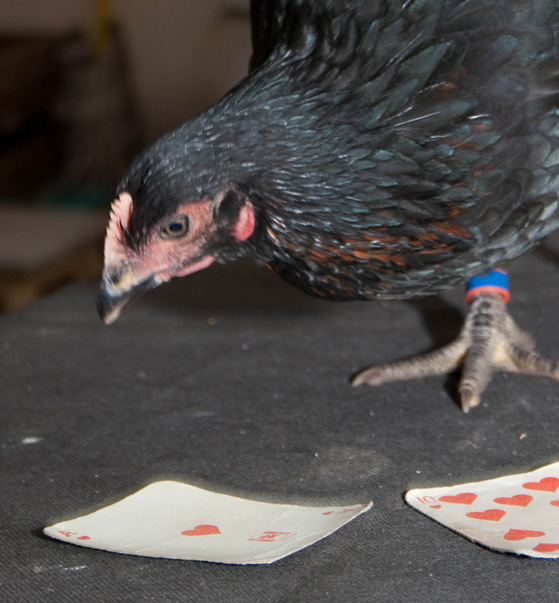
Cer­ta­inly it’s not about teaching chic­ken to shake a paw, play cards or pull trol­ley in between the inte­rvals for egg bearing. It is not about teaching chic­kens at all (altho­ugh they learn very fast), but it is about teaching your­self how to train without using aver­sive methods. It is to convince your­self that much bet­ter, faster results are achie­ved by using methods of posi­tive rein­for­ce­ment. It is because the secret of an effec­tive beha­vior change invo­lves the appli­ca­tion of methods based on moti­va­tion, posi­tive rein­for­ce­ment, reward, instead of yel­ling, phy­si­cal force or punishment.
But why chic­ken? BIRDS DO NOT LET MANIPULATE THEMSELVES!
How many of you pres­sed your dog’s rump to teach him how to sit? Did you ever yell at your child because whole trip to the super­mar­ket was just a disa­ster with baby on your sho­ul­der cry­ing for a new toy?
Listen to this – you will never force any­thing on a chic­ken, so you will not be even temp­ted. Now tell me how many patience did you show while teaching your dog not to pull on the leash or your child not to write on the walls? How many of you would lose it and use the force? I think many – but it is really unnecessary.
Teaching this kind of cre­ature, in prin­ci­ple, sets the coach from the very begin­ning on the right track – posi­tive rein­for­ce­ment track. Tra­ining chic­kens shows that we do not need to use vio­lent methods to edu­cate others.
But why chic­ken? CHICKEN IS FAST!
Tra­ining chic­ken requ­ires tre­men­dous reflex and obse­rva­tion skills. Sup­pose we want to reward some spe­ci­fic beha­vior — such as “sit” in the dog. The dog sits and we say SUUUUPER and give him a treat. But it often hap­pens that it only seems to us that we reward “sit”, but from a dog’s “point of view,” it might have been some­thing else. Between the time that dog actu­ally sat and we said “suuuuper”, many other move­ments could have occur­red like lifting the paw, ect. So basi­cally – if I said “suuuuuper” pra­ising dog’s nice “sit”, but just before my “suuuuper” dog lifted his paw – I cer­ta­inly rewar­ded lifting the paw – not sit­ting. Reflex and obse­rva­tion are neces­sary featu­res of a good coach. Chic­ken is much faster than most ani­mals — if we learn on one of the most dif­fi­cult, other spe­cies will not be a pro­blem for us.
But why chic­ken? Chic­ken does not invo­lve emo­tio­nally with his coach!
Emo­tio­nal rela­tion­ship is often an obstacle during the tra­ining, the coach often does not retain the objec­ti­vity and the object tra­ined quic­kly reali­zes that he will be able to get away with many things. Chic­kens do not get atta­ched to the trainers.
But why chic­ken? Mista­kes made by the tra­iners reflect very quick in the chicken’s beha­vior.
Dogs are a very tole­rant. The dog will finally learn how to sit, despite of the trainer’s mista­kes. Chic­ken will not, either he will not learn any­thing or he will stop respon­ding to the tra­ining at all. By teaching chic­kens we quite quic­kly realize what mista­kes do we make and we cor­rect them very quic­kly.
To all inte­re­sted I recom­mend the book of Karen Pryor “Don’t Shoot the Dog”
See some prac­tice with chic­kens on the pic­tu­res and videos atta­ched from the semi­nary I atten­ded myself.


 Please also see the movies below


You tube - chicken playing cards
You tube - chicken training on the news

--------------------------------------------------------------------------------------------------


Elzbieta Gajewska
Włochata Pasja

First Professional Australian Labradoodle Kennel in Poland
www.labradoodle.com.pl

Fokker van originele Australian Labradoodles
www.australische-labradoodle.nl

Pierwsza hodowla Australijskich Labradoodle w Polsce
www.wlochata-pasja.com.pl

Atumn in Labradoodleland

It was so much fun to jump all over on the Satur­day and alre­ady chilly mor­ning. Ple­ase enjoy the photos


--------------------------------------------------------------------------------------------------


Elzbieta Gajewska
Włochata Pasja

First Professional Australian Labradoodle Kennel in Poland
www.labradoodle.com.pl

Fokker van originele Australian Labradoodles
www.australische-labradoodle.nl

Pierwsza hodowla Australijskich Labradoodle w Polsce
www.wlochata-pasja.com.pl